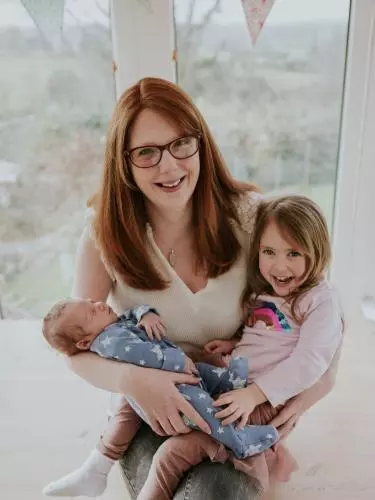
About my current job
My research focuses on understanding the mechanisms that drive both typical and atypical development. Studying infant development can help us to identify early risk and protective factors for emerging developmental disorders.
Fond memories of my time at EP
During the summer vacation of my undergraduate degree, I was awarded a scholarship for a research project in EP with Dr Marko Nardini, which aimed to test how children navigate. Testing our hypothesis involved entirely blacking out a research lab with bin bags and black sheets, crawling around marking out an enormous grid across the lab floor and making a glow-in-the-dark alien spaceship out of glow sticks. We found that, unlike adults, when children navigate, they do not combine their own sense of direction with landmark cues. Our findings were later published in the research journal Current Biology and I got hooked on the excitement of doing developmental research.
With the benefit of hindsight, do you have any advice you'd give your younger self?
I graduated in 2008, in the middle of the financial crash, and moved to London to work as a research assistant. I planned to save money for a year and go backpacking. As the implications of the financial crash became more apparent, I postponed travelling and instead applied for a PhD in the development of Autism. At the time I had no idea how this decision would shape my future career in academia. I am now running the Statistical Analysis of NeuroDevelopment and Psychopathology in Infants and Toddlers (SANDPIT) Lab, where we are interested in characterising the pathways toward typical and atypical outcomes. While I never got to go backpacking, my research career has given me opportunities to visit many incredible places including living abroad for a year. COVID-19 means times are even more uncertain now than back in 2008. My advice would be to seize interesting opportunities, even if they are not quite what you had planned.