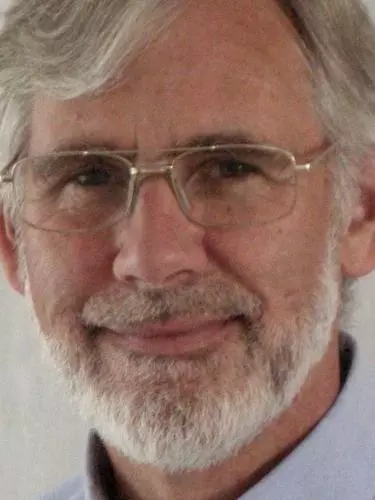
About my current job
Research (Co-PI on Wellcome Strategic Award) Teaching Health Professionals (Mindfulness-based Cognitive Therapy for Prevention of Depression)
Something important I learned during my time at EP
The fascination of the close study of animal and human behaviour. Having studied Latin, English and History at A-Level, I had forgotten the wonders and intricacies of biology and ethology. Second, I learned the importance of evidence, especially how hard-won evidence was for psychological treatments for behavioural and emotional disorders. Third, I learned how to investigate the psychological mechanisms that explain behavioural change through laboratory experiment.
How did my education influence my career path?
The degree course stimulated my interest in research, and the Masters programme (also a qualification as a clinical psychologist) confirmed that it was not only possible but essential to investigate the mechanisms and treatment of serious mental health conditions. I applied this learning to study the mechanisms underlying learned helplessness and depression in my DPhil (Dept of Psychiatry, 1976-79) supervised by John Teasdale. My first job as Lecturer in Applied Psychology in the University of Newcastle upon Tyne (1979-82) helped consolidate this interest and the appointment to be a research scientist at the MRC's Applied Psychology Unit (1982-91) extended and deepened my experience in applying experimental cognitive science to clinical problems.
Fond memories of my time at EP
Staring a stickleback fish in a large tank and trying to see regularities by completing an 'ethogram'. Using prism glasses to alter visually guided reaching a few inches to the right or left, only to find that when the glasses were removed and you felt you were back in the 'real world', you would miss your reach. it taught me the extraordinary malleability of a brain system that appears so unalterable (and it seems that similar phenomena recur throughout psychology - in the rubber hand illusion, the attentional blindness and the choice blindness experiments.)
Did you have a favourite tutor/lecturer/prof, and how did they inspire you?
Dr Jeffrey Gray was a brilliant lecturer and his ideas inspired many of us to see how careful understanding of brain mechanisms underlying anxiety (guided by theory - the Conceptual Nervous System) could help understand emotion, personality and possible treatment.
How did friends made during your time at EP influence your life?
I got to know Dorothy Bishop as we did block practicals together and have been friends and colleagues ever since. When I was at the APU at Cambridge, in the early days of personal computers, I had written my own programs for statistical analysis, but when I came to the limit of what my computer could do, she generously sent me a more advanced stats package that she had written for an Apple II that could run on this larger machine. Later, when at Bangor, and decided to apply for a Wellcome PRF at Oxford, she - already a PRF at EP - gave me wonderful support to help me understand the process of applying, as well as helping me see clearly the structure and scope of the programme of work expected in such awards.
Do you have a lesson or advice that you'd give to current students/researchers at EP?
There are so many unanswered questions in psychology, it remains the most stimulating field to work in. Combining clinical work with research also keeps your research on track to answer the most pressing questions. If research and clinical work is not your thing, it remains true that the preparation that experimental psychology gives you for any career in extraordinary: in sifting evidence, knowing how to interpret data, and using tight logic to write up observations and their relevance to theory in a fluent and understandable way.
With the benefit of hindsight, do you have any advice you'd give your younger self?
Not to be so afraid of others who seem so super-intelligent. I usually didn't dare speak to them, but I would now say - go for it, be more confident.